Considering Web Literacies: Ideas from Mozilla

This is part of a process underway by the Mozilla Foundation to articulate Web Literacies. They describe the process as “… elements we believe it’s important to pay attention to when teaching other people how to read, write and participate on the Web.”

I continue to be intrigued about the concept of thinking of my students’ lives online, and those intersections between learning in school and learning at home with technology, and where those ideas overlap … and don’t. Here, I do like the branching ideas of exploring, building, connecting. Many of the ideas are built on the concept of writing and reading, at least in my mind, but then take those ideas in new directions with technology.
8683509912_8b512e92a0_c.jpg

What do you think? There is more information about the work here.

Peace (in the consideration),
Kevin


Poems with Mary Lee: Building the Skyline

Bundesarchiv Bild 102-09409, Potsdam, Frühstückspause der Gerüstbauer
Mary Lee posted an interesting image of some scaffolders taking a break from work. She’s been kindly posting images from the Wikimedia Commons all month, inspiring poetry. Here’s what I wrote:

My grandfather worked this place,
with brothers and cousins
and fellow blue-collar heroes,
riveting steel into the skyline
as dreamed by those down below …

I listen to Springsteen -
with chords and lyrics
and stories of working-class men -
driving this steel on wheels
to spend hours in those towers …

At lunch, I study the skyline,
watch the clouds,
imagine the dangerous balancing act
my grandfather’s crew performed
each day, every day,
as they built this city,
from the bottom up.

And the podcast:

Audio recording software >>
Peace (in the skyline),
Kevin


Poems with Bud: Plastic People and Other Poems

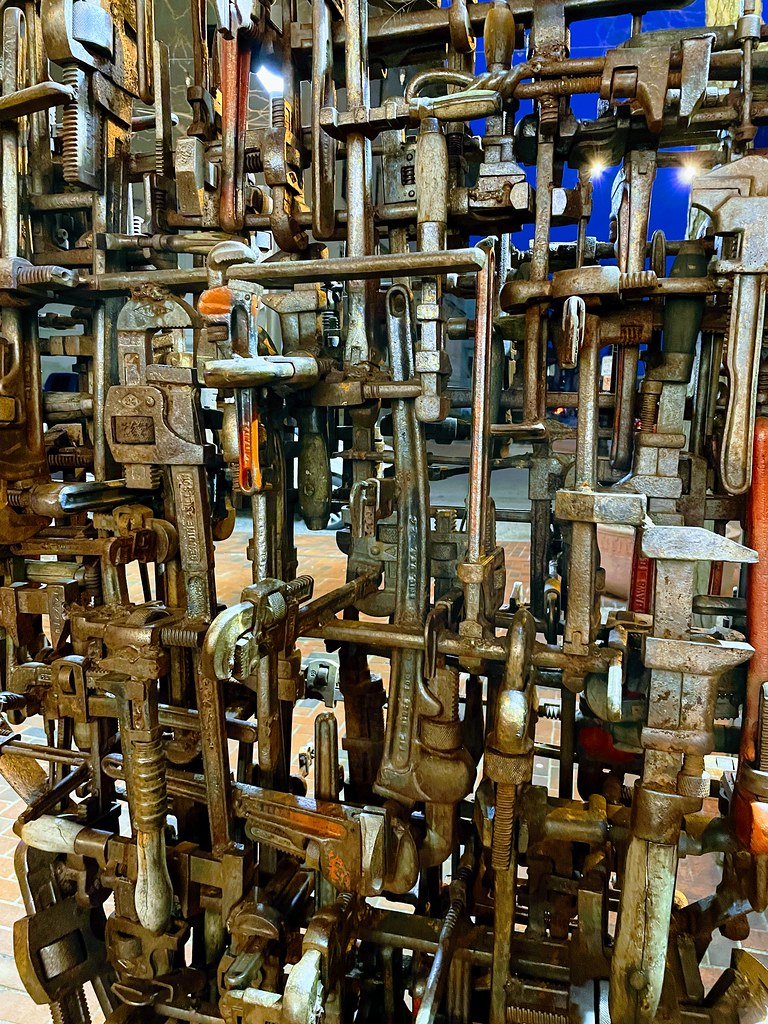
More furniture
I’ve been catching up a bit with Bud Hunt and his posts of images to inspire poetry. This morning, he posted a Lego-inspired theme, and that got me writing this poem:

Interlocking,
plastic worlds;
faces, spaces,
creating places
where we smile
the same, look
the same,
feel
the same,
until little fingers
snap us back into reality,
and we break.

And the podcast:

Audio and voice recording >>

The other day, Bud caught up with some posts and I wrote these two as well:

Your shadow self
follows me -
I feel it –
the breath of you in my ear
as darkness.

(from this image post)

And

As far as our eyes can see,
nothing but distance;
The slow narrowing of lines
on which our stories may never collide.
Instead, we run parallel to each other,
calling out from across the tracks
with words echoing in the distance.

(from this image post)

Nurturing “Close Listening” Skills with Poetry

I’ve been doing more work this year around the idea of “close reading” with my students, focusing in on how to read carefully and critically, and I have definitely seen growth in their analytical skills as a result. We’ve been in the midst of a poetry unit, and I have been trying to take some of those “close reading” concepts and use them for “close listening.” I am working on this because there is a sizeable number of kids who seem to drift off a little too easily at times when I am doing read aloud. And while I want them to be enjoying the text, I also want them to be learning about the text, too.

Poetry seems a perfect way to get at this idea of active and close listening. Yesterday, for example, we studied The Raven by Edgar Allen Poe, and focused on mood. My students were digging into this poem, which was unfamiliar to all but a few of them, and considering the question of  “mood and tone” from listening to the poem. We went about identifying words and phrases, and poetic techniques (symbolism and repetition), to get at the heart of Poe’s classic tale. The we watched The Simpson’s spoof of The Raven, and brought that idea of satire into the discussion (How did The Simpson’s version alter the mood?)

I also used a wonderful book called My America: A Poetry Atlas of the United States. This is a collection of poems that center on a “place” with great imagery. The way this lesson unfolds is that they don’t know what part of the country the poem I read aloud is from, and using evidence from the text they are listening to (the poem), they have to place it on a geographic map of the United States. We use a simple chart, so that they have to pull out “evidence” from the poems to support their guesses, and then another part of the chart has them listening for figurative language devices.

The use of the chart really does focus their listening skills, and the conversations about the evidence they have heard and why it signifies a certain place in the country is wonderful, as the poems connect not only to certain spaces but also sparks memories and poetry about their own vision of places they have been.

Peace (in the share),
Kevin


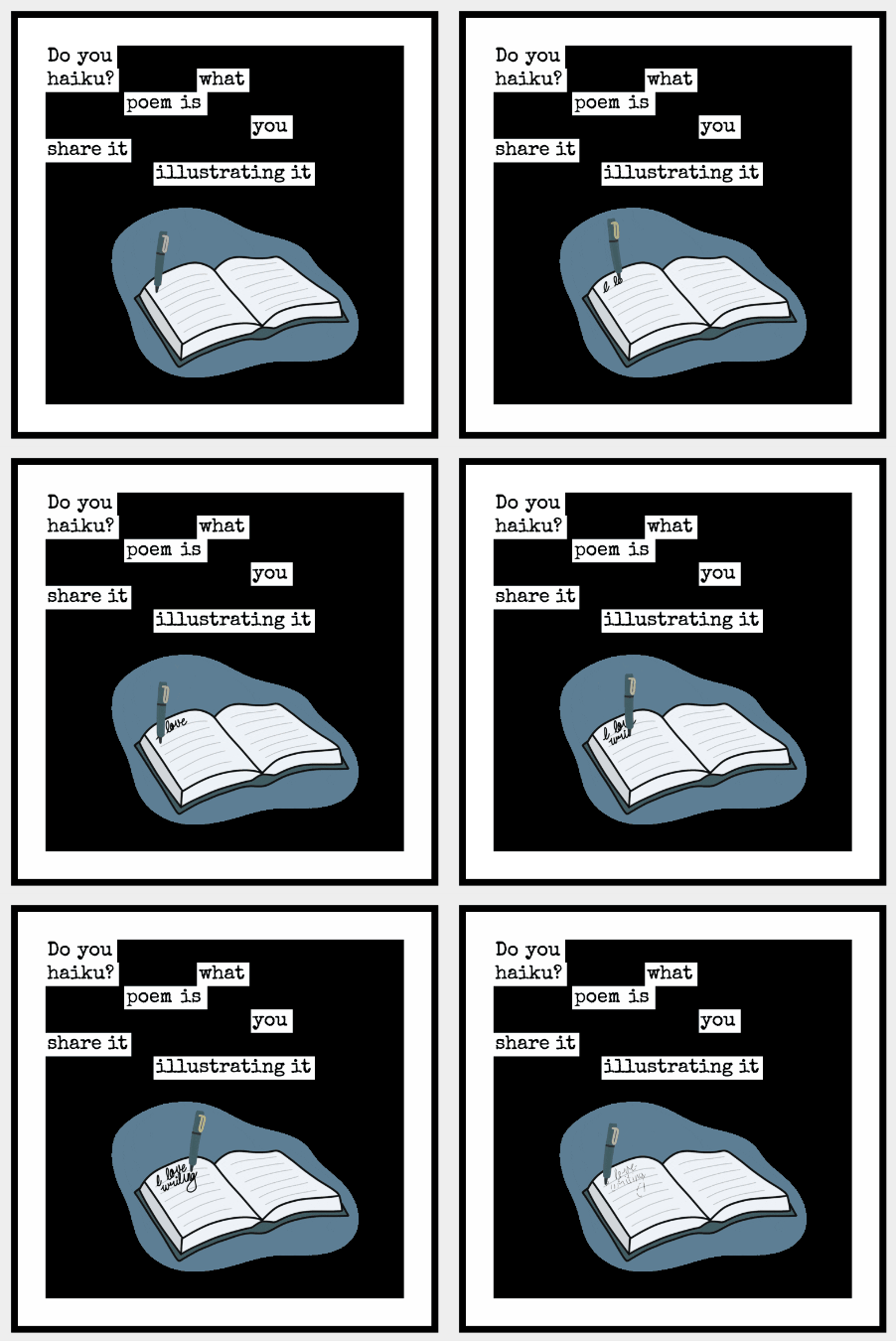
The Haiku Podcasts: Student Voice Collage

We’ve now moving from reading and listening to poetry to writing and publishing poetry, and yesterday, we explored haikus as a form and structure of poetry. Some kids really love haiku; others, not so much. But volunteers from my four classes shared their poems for a podcast collage, and here it is:

I also brought them into Google Translate, and we converted a few of their haikus into Japanese symbols, and then used the audio button to translate their poems. This was one of those activities that I thought of in the last moment but which turned out to be the most engaging part of the lesson. They were amazed to see their poems in Japanese and had a blast listening to the “voice” read their poems to the class (over the speakers).
haiku translate

Peace (in the voices),
Kevin

Poems with Mary Lee: Burn This Castle Down

Mary Lee posted an image this morning of a castle, and I imagined it a flat place, full of stereotypes.
Broadway tower edit
And so began my poem …

I light a match
to this cardboard castle
and burn the story to the ground,
finally free after so many years
of the roles into which we have been thrust:
the hero in shining armor
the damsel in distress
the fool juggling lives before the fickle king.
So now begins the new adventure,
free from the shackles of past
riding hard and fast
into the fading sun.

Listen to the podcast:

Record and upload audio >>
Peace (in the restart),
Kevin