Homepage

Inside Empty Spaces: Music as a Means of Healing

In the years after 9/11, I remember looking to writers and musicians to help me frame some understanding of the event. I wasn’t directly directly affected by the 9/11 attacks — I didn’t know anyone who was killed personally, but there have been ripples of impact over time: a brother-in-law who worked in the rebuilt wing of the Pentagon; two friends who have gone to war in Afghanistan and Iraq; another friend who used to work in the towers and was there during the first bombing attempt.

As I turned to the arts for help in framing some understanding, there wasn’t much there, in my opinion. Some pieces in The New Yorker were eloquent and moving and were perfectly suited to the days following, but where are all the novelists making sense or at least trying to make sense of the event? (The only book that, for me, has done so is Jonathan Safran Foer’s Extremely Loud and Incredibly Close. That moved me beyond measure, and I still think of Foer’s book from time to time.)

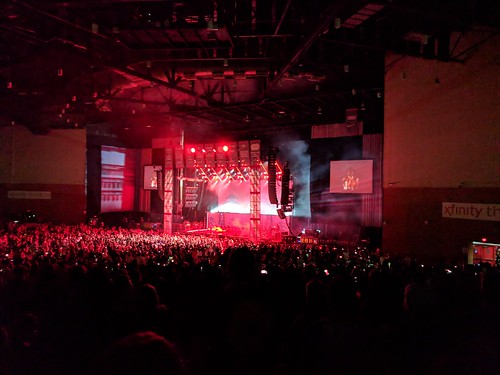
But when Bruce Springsteen came out with his The Rising album, and I sat down with it for the first time with headphones — just me and the music — I realized that Bruce had created what I was looking for at the time. It’s not a perfect album. An even more stripped-down production would have been more powerful. Yet, Bruce captures the feeling of loss and recovery of a catastrophic event on both small and large scales that it touched me as a listener in a way that only music can do.

This week, my friend Paul Hankins was writing about how he was using a song from the album in his school to remember 9/11 with students, and it reminded me how I had not listened to The Rising in so long. I had pushed it away, I guess. I dug The Rising out, and found myself back in that moment of remembering the power of the music again. The power of the songwriter to get at the heart of something bigger than it seems.

Three songs stand out for me because they are carved out of the empty spaces of people who are not coming back. The ghosts of memory haunt the music here. And Bruce sought to show the cycle of loss and recovery in the shadows of love and tragedy:

You’re Missing

My City of Ruins

The Rising

Peace (with music),
Kevin


The Writer in Me: When to Use Twitter/Google+/Blog/Networking

Where I write

This post may come out strangely garbled and maybe a bit incoherent, since I am really thinking through some things as a writer in online spaces. You may just want to skip over me in your RSS reader. Or maybe I am no longer even in your RSS reader. Which is part of what has me thinking of the ways that I find myself writing these days and why I use Twitter for one kind of writing, Google+ for another kind of writing, and this blog for yet another kind of writing. I’d include Facebook, maybe, but I’m not on Facebook. (Maybe that kind of writing is silent protest writing for privacy reasons? Yes).

Here’s what I was thinking about: how do the platforms I use shape the way I write and the reason that I write there?

This question came about the other day because my brain got a bit confused. I had something to write about and then I began wondering: is this a blog post? Maybe it is better suited for a blast on Google+! Wait a second. Maybe Twitter is the way to go. Or the iAnthology space? Arrr. It’s true I could have done all four and spread the idea around like a slab of peanut butter.

But … I decided maybe I should just step back and think about why I was having this rush of confusion about where to write. Maybe I should articulate some reason why I use each of those sites Here, I am trying to create a mental path for myself as an online writer.

I blog … because I want to develop an idea further, without worrying about constraints of space, and constraints of media sharing. I can write as little or as much as I need to to make a point. And this blog is my virtual home — a sort of breeding ground for ideas and sharing. If ever I had an anchor in online writing spaces, this is it. But I have to say, it seems as if fewer people are reading this blog or if they are reading it, they are no longer commenting. I suspect this is part of a larger trend away from blogs. I’ve seen other bloggers reflecting on it, too. And some of them are shifting away from their blog space. I’m not ready to do that. I still like it here. It feels a bit like home.

I tweet … mostly to share resources and links and items of interest that I have stumbled across. I used to do this with the blog but don’t all that much anymore. That aspect — “Hey, check this out! It might be of interest to you!” — has mostly disappeared from my mindset as a blogger. But Twitter, with its short bursts and quick spread of information, is ideally suited for sharing of links and more. (I do still experiment with Twitter as a writing space of 25-word stories and short poems, etc., but not as much as I used to.)

I Google+ (note to self: need better verb for what we do there) … as some intersection of those other two spaces. I’ve been using Google+ enough now to see that it does allow for more writing than Twitter but less than a blog post. Whereas I used to use this blog as a place to ask questions of followers and try to get conversations going, I now find that Google+ is more likely the space where I will wonder out loud about something and hope someone joins me in a bit of inquiry.

I network … at the NWP iAnthology because I want to be part of a larger group of writers. Unlike the other three, I know I am writing with others and not in some virtual vacuum. This shift is important, and hits home on the idea that collaboration and connections with other writers in a space we share together has many benefits (which is why I suppose so many folks use Facebook. Too bad Zuckerberg and company are out to make billions off our privacy data.).

The nagging question I had in my mind this morning was: would I be better served with one single space that does all of what I have written above? I don’t know. One hand, navigating three different spaces on three different platforms for different reasons feels like a lot of juggling. On the other hand, I find these differences – in the “feel” of each space and the use of each space — keeps me fresh and alert for different possibilities. Sometimes juggling is a beautiful thing, right? Sometimes, we drop the ball.

If you hung with me this far, thank you. I appreciate you being here in this space with me.

Peace (in the platforms),
Kevin


The River, after Irene

I took a stroll to the nearby river, to see the impact of Irene.

.

Peace (on the river),
Kevin

Shhh — My Blog is Going Quiet

blogvacation

I’m taking my annual blogging break, and getting a little writing R&R. See you in a few weeks.

Peace (in the world while I am gone, please),

Kevin


Youth Voices: The Hangout from TTT

Paul Allison (quickly) released the Google+ hangout conversation from Wednesday night over at Teachers Teaching Teachers, where topics ranged from school gardening and local food projects to the use of the Youth Voices social networking space for writing. Here is the video of the night’s conversations.

Peace (in the sharing),
Kevin


The Path of a Conversation: from Blog post to Twitter to Google+

Path of a Conversation
One of the more fascinating elements of being part of a network is that interesting discussions can emerge suddenly. This the journey of one particular thread that begin on one platform, moved into another, and then had a slight echo on a third. The experience had me thinking about how ideas “move” and also, how temporary they can be.

It began with my RSS. I get the increasing sense that more and more people are dropping out of their RSS readers for other ways to gathering content (just as I get the sense that blogging is now falling by the wayside for many people). But I still regularly read my RSS feeds, and yesterday, I found a post from Bill Ferriter, whose work and whose writing at The Tempered Radical I greatly admire. I am always interested in what he has to say.

His piece — entitled “Wondering (Worrying) about Graphic Novels” — certainly caught my eye. In it, Bill reflects on the possibility that graphic novels should not necessary be put into the vein as serious literature, and that despite the push by many (myself, included) to bring graphic novels into the classroom, he wondered if they really helped students as readers. He was questioning, more than criticizing, and so I ventured over to his blog.

There was already a very long queue of comments (it probably didn’t help that Bill ends his post by comparing graphic novels to The Jersey Shore in terms of substance), and I added my own thought about it being helpful to question everything we bring into the classroom, and that there are bad graphic novels, just as there are bad novels. And there are great graphic novels, just as there are great novels. What graphic novels bring to the table is a form of visual literacy, nuance, inferential thinking, etc, that many of the commentators noted.

As I usually do with posts that pique my interest, I shared Bill’s post on Twitter and on Google+, figuring I had some book-friendly friends who might be interested. They sure were.

Within minutes, a fast-moving, passionate defense of graphic novels was underway, and Bill himself jumped into the mix. I had trouble keeping up with the conversation but what I sensed was that here was the reason that I use Twitter — for sharing of ideas, for questioning of ideas, for passionate talk about things that matter. It was as if we were hanging out in the coffee shop. I felt bad because I had to leave the conversation early for a family thing but the talk continued long after I left.

Over on Google+, meanwhile, only Paul Hankins and I were briefly chatting it up, and in some ways, Google+ became a slight backchannel to the Twitter conversation that began as a blog post in my RSS feed. I find that amazing. You could argue that that is way too much media/tech for any conversation, but I find it a rich path of dialogue with each medium bringing something different to the texture of the discussion:

  • Blog post: gives Bill a chance to articulate his ideas
  • RSS: presents Bill’s ideas to the world
  • Blog Comments: gives reader a chance to respond to Bill
  • Twitter: engages many writers in a flow of conversation inspired by Bill’s writing
  • Google+: provides backchannel, post-Twitter reflective space

Peace (in the reflective thought),
Kevin


The Figment/NWP Story Hook Connection

Plugged-Unplugged
I came across this story contest through Twitter and given that it is a partnership between the National Writing Project and a story writing site called Figment, I thought it was worth checking out. It is, and I want to invite you to join in, too. The idea here is that published author Courtney Sheinmel has created the first line of a story. You need to finish it, using the Figment website to do so. The writing concept behind the partnership is all about the craft of catching the reader with an opening hook.

Here’s what Courtney came up with:

“I wish spoken words were things that could be erased, forgotten.  But now I knew, and we could never go back.”

The contest is open to anyone on Figment, which apparently is a boatload of interesting writers writing interesting stories. There are already lots of stories in the contest. I wrote mine about the end of a relationship and the balancing act between letting go and hanging on. (read Plugged/Unplugged)

Here is how you get started (full rules and regulations are here):

1. Sign up for an account on Figment
2. Create something new based on the opening lines given
3. Tag it “NWPstarter” (in the tab called “details”)
4. Press “Publish Now”

The deadline is Sunday, July 17 at 9PM EST. Come on and write. And good luck.

Peace (in the stories),
Kevin

Check out ‘The Bully Project’

I stumbled on this at Vimeo, and was completely shaken by the stories starting to unfold in this upcoming documentary. You know, bullying took on a lot of weight this year in our schools — more than usual, thanks to a new state law mandating reporting and intervention — and I feel at times that the students began tuning it out because the concept was so prevalent. But what does impact them are personal stories of kids, and adults reacting, and I think this video documentary might have some good potential for making a difference.

Check out the trailer:

The Bully Project: a year in the life of America’s bullying crisis

The Bully Project Promo from Lee Hirsch on Vimeo.

Please visit our website at:
thebullyproject.com

This year, over 18 million American kids will be bullied, making it the most common form of violence young people in the U.S. experience.

Directed by Sundance- and Emmy-award winning filmmaker, Lee Hirsch, The Bully Project is a beautifully cinematic, character-driven documentary—at its heart are those with the most at stake and whose stories each represent a different facet of this bullying crisis.

Following five kids and families over the course of a school year, the film confronts bullying’s most tragic outcomes, including the stories of two families who’ve lost children to suicide and a mother who waits to learn the fate of her 14 –year-old daughter, incarcerated after bringing a gun on her school bus. With rare access to the Sioux City Community School District, the film also gives an intimate glimpse into school busses, classrooms, cafeterias and even principles offices, offering insight into the often-cruel world of children, as teachers, administrators and parents struggle to find answers.

While the stories examine the dire consequences of bullying, they also give testimony to the courage and strength of the victims of bullying and seek to inspire real changes in the way we deal with bullying as parents, teachers, children, and in society as a whole. Through the power of these stories, The Bully Project aims to be a catalyst for change and to turn the tide on an epidemic of violence that has touched every community in the United States—and far beyond.

Peace (please),
Kevin

From Digital Ethnography: A Video Collage

You need to check this project out from Prof. Wesch and his students as they continue to explore the impact of technology on students. (Did one student say that 75 percent of what he knows he learned from Youtube?)

Here is what Prof. Wesch says at their blog:

Today the Digital Ethnography Research Team of 2011 is proud to announce the release of the Visions of Students Today: a “video collage” about student life created by students themselves and presented using the wonders of HTML5, allowing us to “cite” books and videos that are being presented in the remix as they are being shown.

Since the call for submissions went out in January we have received hundreds of submissions. The remix in the middle of the screen is in many ways a video of my own experience viewing these videos, shot from my own point of view. You see me sifting through videos, putting them in piles, checking resources, reading and re-reading the lines that have informed and inspired me. It took me 3 months to sift through these materials; you get to race through them in 5 minutes.

But just as important, check out all of the other various strands that come alive with this project, as students take the videos and ideas in different directions. You will have to read the blog post there to get a better sense of what I am talking about, or click inside the video collage itself to follow other strands (wow — html5 does open up some new possibilities, doesn’t it?).

What comes through loud and clear is a growing transformation of the daily lives of young people, and the question of whether traditional education is meeting their needs for learning, exploring and making a difference on the world. And we get to hear that story directly from the students.

Peace (in the collage),
Kevin