Fighting the Crowds at Free Comic Book Day

Free Comic Book Day Comics

Well, I have to admit: I was pretty surprised to see the line of people waiting to get into our local comic book store yesterday for Free Comic Book Day (which fell on the May the Fourth Be With You Day, too, so the geeky stars aligned). My 8 year old son and I rounded the corner, timing our visit right for when the store would open because I knew he would not want to wait, only to find a line of people stretching around the corner of the building.

By my count, there were about 170 people waiting to get in, in front of us.

This is the fourth year or so of bringing one, some or all, of my boys to Free Comic Book Day, and while it has grown each year, it was never like this. I don’t know if it is marketing by the comic book store, or the Facebook effect, or if comics are becoming even more popular than I thought, but it was pretty amazing to have to wait to even enter the store (it has an occupancy limit) as if we were waiting for a rock concert or something.

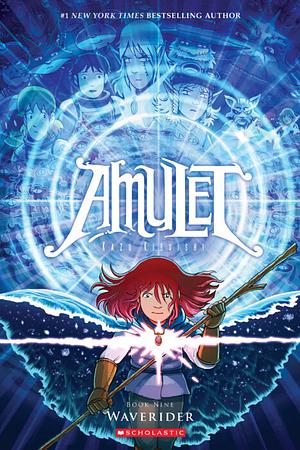
Unfortunately, the store also limited the number of comics each person could get to make their supply last longer (a line had formed behind us, too, so that made sense), and my son and I each only grabbed three titles. I used up my three for what he wanted, of course. And we bought a book (and got a free graphic novel, which was  a nice bonus touch by the store).  We got Tick, Batman, The Simpsons, Smurfs, and a few more.

What did you get?

Peace (in the frames),
Kevin


Book Review: Present Shock

I found it interesting that in the last few pages of Present Shock, writer and thinker Douglas Rushkoff notes that the format of his book — a published tome, a few hundred pages long — is an example of the very ideas that he is writing about in the book — which is that technology and the digital revolution has made the “in the moment” moment the key idea of just about everything that we now do. He wonders out loud what his book would look like if he had to post it, bit by bit, on a blog or some other online writing space, and how it would reshape the ideas.

I had to laugh, not just because it was a nice way to end the book but also because I had been thinking the same thing in the middle of Present Shock when I started to lose interest and began to feel as if Rushkoff was losing his focus as a writer. I found myself speed-reading sections, skipping over over parts that did not interest me, and wondering (in jest) where the hyperlinks were or the search engine in this book.  I almost gave up on the book any number of times and began to look at reading it as a chore more than a pleasure (I hate that). All that, only to find that Rushkoff at the end of the book is wondering the same thing, as writer. Will his audience stay with him?

Yes, I did get to the end, but I didn’t find myself as inspired with the text as I have been with some of Rushkoff’s other books. I still think Program or Be Programmed has some of the most intelligent ideas I have read about how to situate ourselves in the digital world, giving ourselves agency when it comes to using our technology. Here, in Present Shock, I felt as if Rushkoff was all over the place as a writer, and I sort of wished he could have whittled down the book and finely tuned his focus on the concept of “time” and the “now” that we seem to always live in. He paints a large canvas of many ideas. Yet, I didn’t feel like he successfully connected them all together in a meaningful way that allowed me to make better sense of my world. Knowing him as writer from the past, this was disappointing to me.

Or maybe that is just me, the reader, wanting to take big ideas in with one huge gulp, validating all that Rushkoff is writing about.

:)

Peace (in the present),
Kevin


Final Reflection: Writing, Poetry, Audience and Online Networks

This is one of those posts where I am not sure where I am heading. Bear with me.

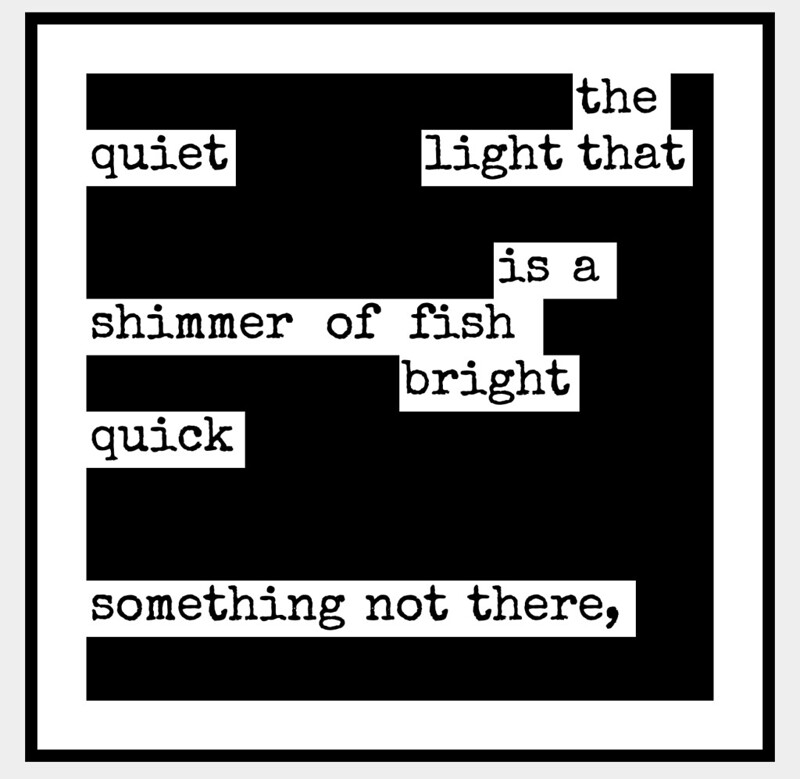
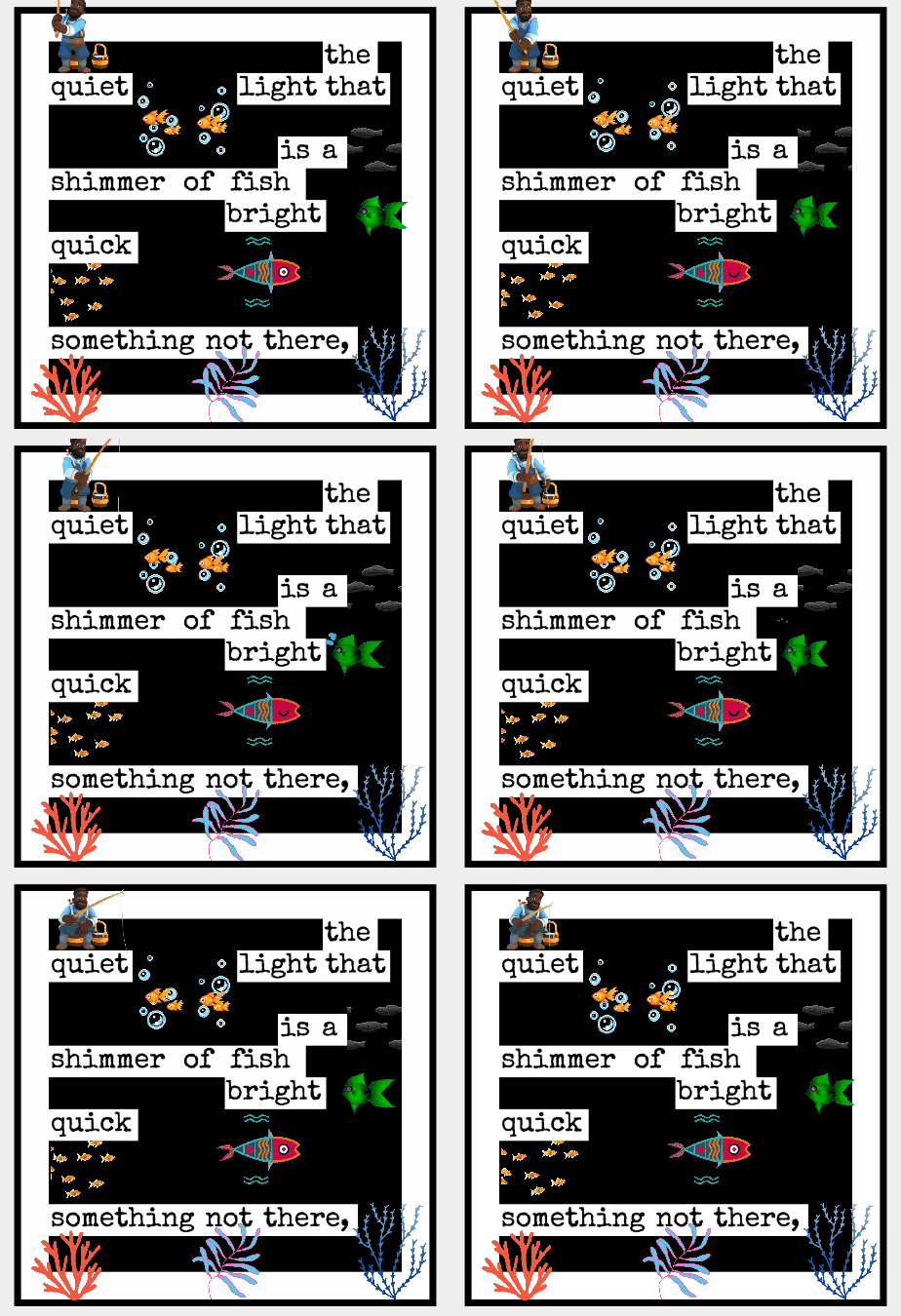
Throughout April, each morning, I was writing poems. Inspired by images put up by Bud Hunt at his blog site (Bud the Teacher) and by Mary Lee Hahn at her blog (A Year of Reading), I worked to be inspired by the media they had chosen to write poetry, every day.  I’d sit down with my cup of coffee, stare at the image chosen for the day and just write, and see where it took me. Some of the poems were magical; Most were just ordinary and quickly forgotten. You just never knew, and that was part of the gift of it.

I’ve been doing this with Bud for a few years now. Mary Lee just started her month of media this year (I think) as part of lessons around how to use Wikimedia Commons in the classroom. I know, and admire, both Mary Lee and Bud, I should add. Both are wonderful educators and writers, and I am grateful to have them in my network and community, and as friends.

In years past, at Bud’s site, a small group of others, including Bud, would be writing poems each day, too, so I always felt like I was part of a writing cadre, and I held on to this vision of us, in different places in the world, looking at the same image that Bud had chosen and writing from different viewpoints. It is a fascinating thing to read what someone else has imagined from the same photo that you just used for your own imagining. There grows this thread between writers.

This year, for whatever reason, no one else wrote at Bud’s site. (Not true, Bud posted one or two poems early on). But for the most part, my words and lines were the only poems on the page. It felt rather lonely, to be honest, but I kept writing because I was writing for myself as much as for Bud and the world. I even did some podcasting with Soundcloud of poems, but then realized through hit counts that only four or five people were listening. (It’s possible that other folks were writing in other places, but I never saw where).

I came to Mary Lee a few days late into the mix, and joined in a bit reluctant. Did I really want to write two poems every day? I did. And I did, and it was wonderful. Here, with Mary Lee, there was a small writing community in play, and the very things that I missed at Bud’s site this year – other writers — was in bloom at Mary Lee’s. A handful of poets were using Mary Lee’s inspiring media (images and videos) to write poetry, and even offer up some reactions to each other (I didn’t do enough of that every day, but I did some). It was lovely to come back later in the day and see how the post unfolded, with Mary Lee moving poems from the comment section to the main post as a showcase of sorts. I felt very connected as writer. There was an audience and a gathering of friends, all rolled up into one experience.

I can’t say I did not enjoy writing with Bud this year. I did. I always love the images he pulls out, and I appreciate that he does it, even if this year it felt like he was only doing it for me. (Thanks, Bud!) But it didn’t emerge as a writing network and by the end of the month, I was less inspired than at the top of the month. Mary Lee’s project did have those elements of connections, and that made all the difference in the world for me as a writer. I am thankful for both of my friends, but I wonder where all of the writers with Bud went to.

I told you I was going to meander, and so I did.

Peace (in the reflection),
Kevin

When the Web Was Young, Remixed

Hacking the First Webpage

With deep and humble apologies to Tim Berners-Lee and his colleagues, I took up a challenge by a fellow learner in the Teach the Web Mooc to use Mozilla’s Xray Goggles tool to hack and remix the very first website ever put up on the Internet. The website by the CERN research group had its 20th anniversary the other day (see the original) and I even brought it up on the our interactive board for my students to view and reflect on (they noticed how bland it was with a white background and black text, that there was no advertising, no images or video, and a surprising number mentioned the lack of an embedded Google search button … which I found interesting). I made sure to mention that while the page is simple, it sparked a revolution of how people use technology in a revolutionary way, and changed everything.

That got them thinking.

I hacked the Cern site with the intention of giving it some attitude and being playful, and trying to reference where this simple page might take us (including a cats reference). If I had had more time, I would have messed with the hyperlinks, but I didn’t so I didn’t. It might be an intriguing class activity to have students do the same, reflecting the period that the page was published in. I didn’t do that, but I may keep that one on the backburner a bit.

Read my remixed/hacked version of the first website

Peace (in the hack),
Kevin

Teach the Web: A Popcorny Digital Poetry Introduction


(go directly to the video)

I am taking part in a MOOC called Teach the Web, which is part of an effort by the Mozilla Foundation  and a group called HIVE to explore tools for creating and making on the web. The first task involved creating an introduction of sorts, using a tool that pulls you out of your comfort zone. I decided, as it seems many did, to use the Popcorn Video tool by Mozilla. Popcorn is a online video editor, with a handful of interesting little extras.

I mulled over where to begin and decided to take pieces of digital poems that I have posted over at YouTube and create a video collage of sorts, using pieces of media. I won’t say this effort was easy, and I won’t say I am completely happy with the final result. It feels jagged to me. In fact, I got frustrated many times with Popcorn, as it seemed slow to respond to my commands and didn’t always do what I wanted it to do. I had a vision, and the Popcorn tool often got in the way of the vision. I could have downloaded the videos and used iMovie, and gotten a more seamless production in half the time.

But this is about learning, and the experience did remind me of the frustration that some students and many teachers feel when confronted with new technology that you hope will go one way and doesn’t. I was cursing under my breath a few times, and literally had to walk away from the computer two or three times (odd for me, in the midst of a project, where my focus is pretty intense). It made me realize how we expect our technology to work without issue, without troubles, and for our own purposes. Sometimes, that is not the case.

Will I use Popcorn again? Yes. It has a lot of potential, but I will approach it warily, knowing its limitations (for now).

Peace (in the corn),
Kevin


Poetry Withdrawal and the Rhythm of Writing

I spent much of April writing and thinking “poetry.” Each and every morning, I worked on one or two poems, and sometimes added my voice as a podcast. I believe I wrote more than 50 poems in April, collecting most in a Google Doc for a later look. Some, I know I know I need to add to the Google Doc so that I don’t lose them forever (although, I don’t always mind that either — the scattering of poetic lines to the wind). Many of the poems are not worth saving, but there are a few gems in there, I think.

So it is an odd feeling now to not be writing poems yesterday and today, now that we are in May. Oh, I know I can still be writing them (and I will) but the breather and the break is helpful, too. Poetry is more than April, after all. Still, it’s funny how you get into a rhythm of things, a rhythm of writing, and then when you stop or break up the momentum, things feel … different. As if I am a different writer looking at the world from a slighter different angle than when I was writing poems every day. I had that same experience in the aftermath of the Slice of Life writing, where I spent my days eying so many little moments that when March ended, I had withdrawal.

Just an observation …

Peace (in the poems still be written),
Kevin


Poems with Bud and Mary Lee: Where It Ends, It Begins

I want to do a shout out to Bud Hunt and Mary Lee Hahn for posting images and media files all month at their blogs to inspire readers to write poetry. I’ll write more about my experience, but here are my final two poems.

Mary Lee posted this intriguing animaged GIF file.
Zipper animated

Which led to this poem:

Where it ends is where it begins,
our words entwined like wires
moving with electricity through the world
from our fingers to our ears
to the universe beyond.

Where it ends is where it begins,
a spark of creativity and connectedness
and shadows of worlds unfolding on the page
from our fingers to our eyes
to our thoughts settled inside.

Where it ends is where it begins,
poems as stories as memories
as thinking, as sharing in this space
where time and distance are immeasurable
and where our words collide
forever.

And this is the podcast:

Audio and voice recording >>

At Bud the Teacher, Bud shared this image:
RAK #17

Which led me to this poem:

Today,
I pretend to walk with perfect symmetry,
ambling slowly beneath nature’s beautiful arc
of flower petals, honeycombs, ice crystals,
and all of the invisible magic of geometry
so that all my own imperfections
disappear.

And the podcast:

Voice Recorder >>
 
Peace (in the poems),
Kevin


Considering Web Literacies: Ideas from Mozilla

This is part of a process underway by the Mozilla Foundation to articulate Web Literacies. They describe the process as “… elements we believe it’s important to pay attention to when teaching other people how to read, write and participate on the Web.”

I continue to be intrigued about the concept of thinking of my students’ lives online, and those intersections between learning in school and learning at home with technology, and where those ideas overlap … and don’t. Here, I do like the branching ideas of exploring, building, connecting. Many of the ideas are built on the concept of writing and reading, at least in my mind, but then take those ideas in new directions with technology.
8683509912_8b512e92a0_c.jpg

What do you think? There is more information about the work here.

Peace (in the consideration),
Kevin